
Materials
Faux suede, the nap, and what water does to it
A faux suede surface changes shade because tiny fibres lean in one direction. Understanding how the nap shifts under pressure or rain keeps the material looking uniform across seasons of wear.
The structure of the nap
Faux suede is built with tiny upright fibres that settle in a single direction. When your hand sweeps across the panel, those fibres tilt and reflect light differently, making the surface look darker or lighter in patches. This is not wear or fading. It is simply the mechanical grain of the textile moving under friction.
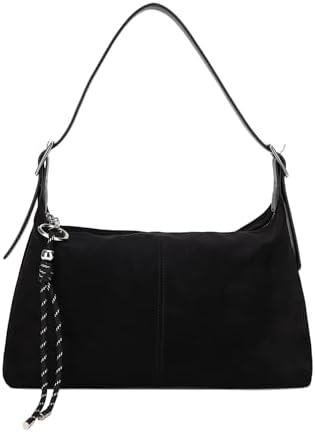
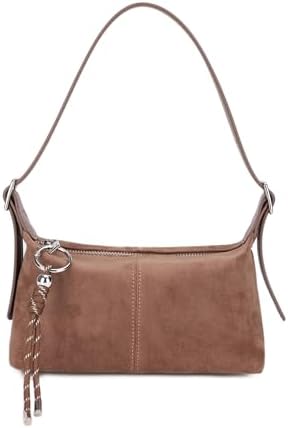
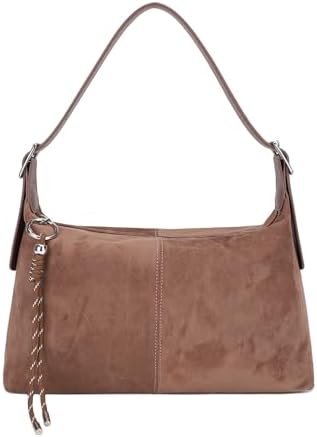
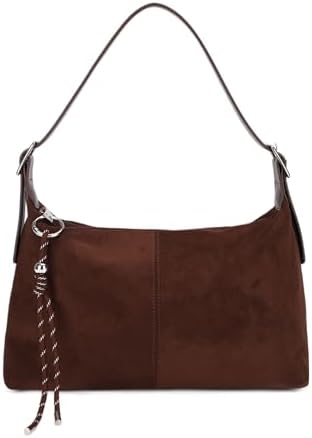
We cut soft shoulder shapes from this material because it bends without cracking along a seam. Across our current range, 6 of our bags are cut in faux suede panels. Each one shows shade variations as soon as it rests against a coat or sits on a car seat for an afternoon.
Why water leaves a ring
Raindrops do not soak through and stain faux suede the way liquids penetrate untreated leather. Instead, the weight of the water droplet pushes the fine fibres flat against the base fabric. When the moisture dries, those fibres remain pressed down in a circle, creating a dark mark that looks like a permanent oil spot.
The ring is entirely optical. Because the flattened area reflects light at an angle different from the surrounding upright pile, your eye reads it as a stain. Letting the panel dry naturally and sweeping the pile upward restores the original surface without any chemical wash or heavy treatment.
Faux suede responds to pressure and air rather than polish, keeping its tone whenever the nap is brushed in the direction it was cut.
Habits that damage the fibre
We do not recommend using stiff brass shoe brushes designed for heavy animal hides. Those metal bristles pull at synthetic threads and leave bald patches on thin bag walls. A soft dry cloth or a clean toothbrush with gentle nylon bristles is enough to lift the nap without scraping away the surface.
Never apply hot air from a hair dryer to speed up drying. High heat melts or hardens synthetic microfibres, setting a flat ring into the panel permanently. Wet faux suede should dry away from direct heat sources before you brush the fibres back in line with light strokes.
Creases and everyday storage
Soft hobo bags rely on a relaxed drape, and 9 colourways sit in the suede and hobo section of our line. Because the material is supple, a slouchy hobo holds the creases it is stored in if it sits compressed beneath heavy coats or inside a crowded drawer for weeks.
To keep the body smooth between outings, store the bag upright with light tissue filling inside the main compartment. Keeping the shape rounded prevents sharp folds from crushing the nap along the base seams, where friction against tables is already at its highest.
The faux suede in the range
More from the journal
The drop decides where a bag lands, not the word on the label
A bag is not defined by general labels like small or medium. The true position on your frame comes down to the strap drop, measured in clear inches from the shoulder…
VolumeWhat actually fits in a camera bag
A compact crossbody is only as useful as its internal volume. We look at printed dimensions, the role of depth, and what stays behind when packing light.
StrapsTwo straps and what the second one actually buys you
A spare strap promises two silhouettes from a single body, shifting from a wide webbing cross to a narrow chain.
Work out your own drop
Measure the bag you already wear at the right height, then see what in the range reaches the same number.